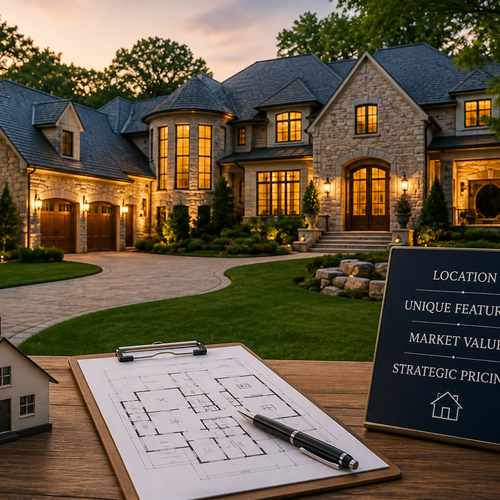

Custom homes can be some of the most impressive properties in Hawthorn Woods, but they can also be among the most difficult to price correctly. Unique architecture, premium materials, specialized rooms, expansive lots, and highly personalized improvements make simple comparisons with neighboring homes less reliable.
If you're trying to understand how to price a custom home in Hawthorn Woods, the goal is to identify which features the current market is likely to reward without assuming every dollar invested in the property will translate directly into resale value.
Homeowners preparing to sell can visit how to price a custom home in Hawthorn Woods for local guidance on evaluating, positioning, and marketing a distinctive luxury property.
Why Custom Homes Are More Difficult to Price
Traditional homes in relatively uniform subdivisions can often be compared using similar square footage, age, lot size, and condition. Custom properties are different because the characteristics that distinguish them may not exist in nearby comparable sales.
A home might have extensive millwork, a dramatic two-story library, an indoor sport court, a professionally designed outdoor living area, or architectural details that cannot be evaluated through square footage alone.
Fewer True Comparables May Exist
The more distinctive the property, the harder it can be to find recent sales that closely match it. Pricing often requires analyzing several imperfect comparables and understanding why buyers may value one home differently from another.
Price Per Square Foot Has Limitations
Square-foot calculations can provide context, but they should not be the only valuation method for a custom home. Construction quality, layout, condition, lot setting, finishes, and specialty amenities can create substantial differences between similarly sized properties.
Start With the Hawthorn Woods Luxury Market
Before assigning value to individual custom features, sellers should understand how the property fits into the broader Hawthorn Woods market. Buyers considering luxury homes may compare properties across several neighborhoods, price points, and architectural styles.
The Hawthorn Woods luxury homes and community guide can provide useful context about local real estate, neighborhoods, available properties, and the types of homes competing for buyer attention.
Your Competition Is What Buyers Can Purchase Today
Recent sales help establish historical value, but current listings show buyers their immediate alternatives. A prospective purchaser may compare your custom home with several properties that differ substantially in style but fall within the same budget.
Luxury Buyers Can Search Across Community Lines
A buyer who prioritizes privacy, acreage, custom construction, or specialty amenities may compare Hawthorn Woods with nearby luxury communities rather than limiting the search to one subdivision.
Separate Construction Cost From Market Value
One of the most important principles in determining Hawthorn Woods custom home value is understanding that the amount spent to build or improve a property is not necessarily the same amount buyers will add to its resale value.
Construction reflects labor, materials, design choices, contractor costs, and the owner's individual preferences. Market value reflects what today's buyers are willing to pay relative to available alternatives.
Expensive Does Not Automatically Mean Valuable to Every Buyer
A highly specialized improvement may have required a significant investment while appealing strongly to only a small percentage of potential purchasers.
Broadly Appealing Improvements Often Carry More Market Weight
High-quality kitchens, functional floor plans, attractive outdoor areas, updated mechanical systems, and well-executed primary suites may appeal to a broader range of luxury buyers.
Evaluate the Quality of Construction
Custom construction can vary dramatically in quality. Buyers may notice materials, craftsmanship, architectural details, windows, cabinetry, millwork, flooring, masonry, and other features that differentiate a thoughtfully constructed residence from a home that simply has a long list of upgrades.
When quality is a major selling point, marketing should help buyers understand it.
Identify Materials Buyers May Not Immediately Recognize
Some premium materials are visually obvious, while others may require explanation. Gather available information about significant construction features so they can be described accurately.
Craftsmanship Can Support the Value Story
Thoughtful details throughout the home can collectively influence buyer perception even when it is difficult to assign each one an individual dollar value.
Determine Whether the Floor Plan Has Broad Appeal
A custom floor plan can either strengthen or limit a home's marketability. Thoughtfully designed spaces that support contemporary lifestyles may attract strong interest, while highly specialized layouts may require the right buyer.
When pricing luxury homes with unique features, sellers should consider not only how expensive a design was to create but how functional today's buyers will find it.
Functional Luxury Often Performs Well
Features such as dedicated offices, generous kitchens, comfortable primary suites, functional mudrooms, flexible spaces, and indoor-outdoor connections may have broad practical appeal.
Highly Specialized Rooms Can Narrow the Audience
A room designed around a specific hobby or use may be extremely valuable to the right buyer but less important to someone who immediately imagines converting it.
Consider Whether Custom Features Are Timeless or Highly Personal
Customization becomes more difficult to value when it strongly reflects the tastes of the current owner. Buyers may appreciate quality craftsmanship while still calculating what it would cost to change colors, materials, built-ins, or layouts that do not match their preferences.
The distinction between custom and overly personalized can therefore affect pricing.
Timeless Features May Appeal to More Buyers
Quality natural materials, classic architectural details, functional built-ins, and thoughtfully designed spaces can maintain appeal even as trends change.
Personalization May Require Strategic Presentation
Highly distinctive colors, decor, furnishings, or room uses can sometimes be simplified through staging so buyers can focus on the underlying architecture and quality.
Do Not Overlook the Lot
A custom luxury home is only one component of the overall property. Hawthorn Woods buyers may place substantial value on lot size, privacy, mature trees, views, outdoor living, and the relationship between the residence and surrounding land.
For some estate properties, the setting may be just as difficult to reproduce as the architecture itself.
Privacy Can Support a Premium
A well-positioned property with mature screening and meaningful separation from neighboring homes may appeal strongly to luxury buyers seeking a private retreat.
Usable Land Matters More Than Acreage Alone
Buyers evaluate how they can actually use the property. Outdoor entertaining areas, lawns, gardens, pools where applicable, landscaping, and recreational spaces can influence how valuable a large lot feels.
Outdoor Living Can Be a Significant Custom Feature
Many high-end homes extend luxury beyond the interior. Professionally designed patios, outdoor kitchens, pools, fireplaces, landscaping, lighting, and gathering areas may substantially enhance the ownership experience.
However, these features still need to be considered within the context of local buyer expectations and property condition.
Condition Matters
An impressive outdoor feature may add less perceived value if buyers immediately see significant repair or maintenance needs.
Show How the Spaces Connect
Photography and video should demonstrate the relationship between indoor entertaining areas and the outdoor environment rather than presenting each amenity as an isolated feature.
Specialty Amenities Need the Right Valuation Approach
Luxury homes can include wine cellars, theaters, gyms, saunas, sport courts, elaborate bars, smart-home systems, generators, extensive garages, and other uncommon amenities.
These additions can help differentiate a property, but their resale contribution depends heavily on buyer demand.
Avoid Adding Construction Cost Directly to the Price
A seller may have spent heavily creating a specialty amenity, but buyers will compare its usefulness with other features they could obtain for the same overall purchase price.
Use Unique Features to Differentiate the Home
Even when a feature does not provide dollar-for-dollar resale value, it can make the property more memorable and potentially attract buyers specifically seeking that amenity.
Major System Updates Can Support Buyer Confidence
Not every valuable custom-home improvement is visually dramatic. Roofing, windows, HVAC systems, generators, electrical upgrades, drainage improvements, and other major projects may not generate the same emotional response as a renovated kitchen, but they can reduce perceived future ownership risk.
That can become an important part of the home's value proposition.
Document Significant Investments
Gather invoices, warranties, permits where appropriate, and installation information for major systems and improvements. Buyers may not immediately know these upgrades exist without clear documentation.
Maintenance History Matters
A custom property with sophisticated systems can feel intimidating if buyers believe significant deferred maintenance is approaching. Organized records can help provide context.
Adjust Comparables Instead of Searching for a Perfect Match
With a truly custom home, a perfect comparable may not exist. Instead, pricing may require looking at several properties and analyzing how they differ in location, lot, square footage, condition, architectural quality, amenities, and market timing.
The goal is to build a reasonable range supported by market evidence rather than forcing one sale to serve as an exact match.
Use Multiple Reference Points
One comparable may be similar in size, another in construction quality, and another in lot setting. Together, they can provide more useful context than any single sale.
Recency Still Matters
An older sale can be informative, particularly for unusual properties, but current market conditions and recent buyer behavior should also be considered.
Do Not Let Emotional Investment Determine the Asking Price
Custom homes often carry more emotional attachment than conventional properties because owners personally selected many of the details. The home may represent years of planning, construction decisions, improvements, and family memories.
Those experiences are meaningful, but buyers will still evaluate the property according to the alternatives available in today's market.
Buyers Do Not Know What Every Feature Cost
They primarily evaluate whether the complete property provides enough value relative to other homes within their budget.
Market Value Is Forward-Looking
Past investment can provide context, but the eventual sale price depends on what current buyers are willing to pay today.
Avoid Testing the Market With an Inflated Price
Owners of unique homes sometimes believe they should start unusually high because there is nothing exactly comparable. This can create a problem if buyers interpret the price as unsupported rather than distinctive.
An overpriced custom home may sit on the market while buyers purchase other luxury properties that offer a clearer value proposition.
Luxury Buyers Still Compare Value
A substantial budget does not eliminate price sensitivity. Buyers often have more alternatives across communities and may be particularly analytical about how properties compare.
Long Market Time Can Change Perception
When a custom property remains available for an extended period, buyers may begin wondering why others have passed on it, potentially weakening negotiating leverage.
Professional Marketing Is Essential for Unique Features
A custom feature cannot influence value if buyers do not understand it. Professional photography, video, property descriptions, floor plans, and other marketing materials should make the home's distinctive characteristics easy to recognize.
The strongest marketing explains how those features improve the lifestyle rather than simply listing expensive materials and amenities.
Tell Buyers Why a Feature Matters
Instead of only mentioning an outdoor kitchen, show how it connects to entertaining spaces. Instead of simply identifying a home office, demonstrate its privacy and functionality.
Use Visual Marketing to Explain Scale
Large lots, dramatic rooms, extensive outdoor environments, and complex layouts can be difficult to understand through standard photographs alone. Appropriate video and elevated imagery can provide additional context.
Prepare a Property Feature and Improvement Record
Before listing, sellers should organize a clear inventory of major improvements and distinctive property characteristics. This can help the real estate agent determine which details deserve emphasis in marketing and which may support valuation.
A well-organized record also makes it easier to answer buyer questions during showings and due diligence.
Include Major Renovations
Document kitchens, bathrooms, additions, finished lower levels, outdoor improvements, roofing, windows, mechanical systems, and other substantial work.
Include Details That May Not Be Obvious
Insulation upgrades, smart-home infrastructure, backup power, specialty construction materials, drainage work, and other less visible improvements may still be relevant to buyers.
Know Which Features to Lead With
A custom property may have dozens of special characteristics, but presenting all of them equally can make the strongest selling points harder to identify.
Prioritize features that are both distinctive and likely to matter to the target buyer.
Identify the Property's Three or Four Defining Advantages
These might include an exceptional lot, architectural quality, extraordinary outdoor living, a unique recreational amenity, or a recently renovated interior.
Support Those Advantages Throughout the Marketing
Photography, listing copy, video, and showing preparation should reinforce the same core value story rather than presenting an unrelated collection of features.
Watch Buyer Feedback Closely After Launch
Even a carefully researched asking price should be tested against actual market response. Showings, second visits, online engagement, buyer comments, and offers can reveal whether purchasers understand and value the home's custom characteristics.
This information is particularly important for properties with few direct comparables.
Look for Patterns
One buyer may dislike a specialized feature that another considers essential. Repeated comments from qualified buyers are more useful than isolated opinions.
Adjust Positioning Before Automatically Reducing Price
If buyers do not understand a valuable feature, improved marketing or presentation may be appropriate before concluding that the asking price itself is the problem.
Be Prepared to Defend the Price With Evidence
A distinctive property can justify a premium, but buyers and their agents may ask how the asking price was established. Sellers should be prepared with a thoughtful analysis rather than simply pointing to construction cost or emotional value.
A well-supported pricing strategy can also become helpful if an appraisal is involved in a financed transaction.
Comparable Sales Still Matter
Even imperfect comparables can help demonstrate the market range when differences are clearly understood and appropriately considered.
Documentation Strengthens the Property Story
Improvement records, feature lists, floor plans, surveys, and other relevant documentation can provide context for what distinguishes the home from competing properties.
Conclusion: Pricing a Custom Hawthorn Woods Home Without Overpricing
Understanding how to price a custom home in Hawthorn Woods requires balancing what makes the property special with how today's luxury buyers evaluate value. Construction cost, personalization, and rarity are important considerations, but they do not automatically justify an unlimited premium.
Determining Hawthorn Woods custom home value means looking at comparable sales, current competition, lot quality, condition, architecture, functionality, construction quality, and buyer demand together. When pricing luxury homes with unique features, the strongest strategy identifies which characteristics genuinely distinguish the property while remaining grounded in current market evidence.
To learn more about the team's experience helping homeowners position distinctive luxury properties, visit the Helen Oliveri Real Estate Google Business Profile and explore client experiences throughout Hawthorn Woods and Lake County.
Wondering What Your Custom Hawthorn Woods Home Is Worth?
A custom property deserves an individualized valuation rather than a generic price-per-square-foot estimate. Understanding which improvements buyers are likely to reward, how your lot compares, and where your home fits within today's luxury market can help you establish a price that protects value without discouraging qualified buyers.
If you're considering selling a custom or highly upgraded property, contact the Helen Oliveri Real Estate Team to discuss your home's distinctive features and develop a personalized Hawthorn Woods pricing and marketing strategy.
Check out this article next